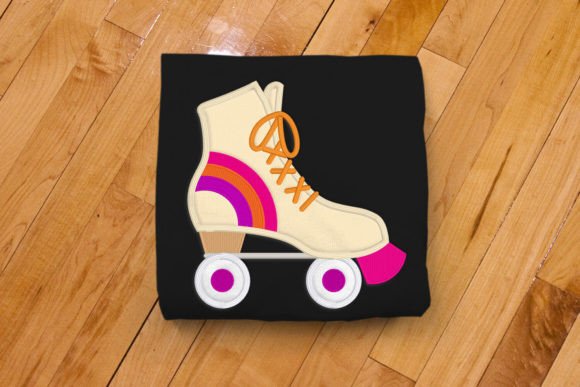
Retro Rollerskate Applique Embroidery
When I unzip a new embroidery file and see a design like Retro Rollerskate Applique Embroidery, I immediately picture a bustling Saturday morning craft fair. There are tote bags slung over shoulders, patches pinned to jean jackets, and that one booth where everything just feels sun-drenched, nostalgic, and impossible to walk past. This is not a quiet, blend‑into‑the‑background motif. It’s a playful, retro‑cool statement piece that knows exactly who it’s for — and that kind of clarity is pure gold when you’re trying to stop foot traffic at a handmade market.
First Impressions: A Nostalgic Punch of Roller‑Rink Charm
Right out of the digital folder, the design reads as bold and unapologetically cute. The retro stripes do the heavy lifting, instantly recalling vintage skate culture, roller discos, and a Gen‑X‑meets‑Gen‑Z love for all things throwback. Because it’s an applique design, the skate itself will have that satisfying fabric‑on‑fabric dimension. This isn’t a flat line drawing; it’s going to feel tactile, which on a table full of printed goods is a massive advantage. In terms of style, it sits firmly in the fun, sporty, and decorative camp — not elegant, not rustic, not minimalist. If you curate a booth around Sports themes, retro‑inspired accessories, or gifts for roller derby enthusiasts, this piece becomes your anchor design.
The phrase “perfect gift idea for your favorite roller girl” in the product description is spot‑on. It telegraphs a clear customer: someone shopping for a birthday, a teammate, or a bit of self‑care nostalgia. That built‑in gifting angle means you’re not just selling a design; you’re selling an easy decision.
Where Retro Rollerskate Applique Embroidery Performs Best at a Craft Fair
Over the years, I’ve learned that an embroidery design’s booth success depends less on how complex it looks and more on how quickly a buyer can imagine it in their own life. With this retro skate, that mental leap happens in seconds.
Here’s where I’d place it to get the strongest return:
- Tote bags and market bags: A large‑scale placement on natural canvas makes the stripes pop. Shoppers carrying one become walking advertisements for your booth.
- Pillow covers: As the product description suggests, a single cushion sporting this skate turns a bedroom corner or reading nook into a personality statement. Pairs well with other retro or music‑theme pillows.
- Patches: Stitched on felt or twill backing, sold loose in a basket or iron‑on ready, patches are a low‑commitment impulse buy that appeals to teens and adults. The skate design is compact enough to work beautifully here.
- Baseball caps and dad hats: Though curved surfaces can be tricky (more on that later), a well‑hooped cap with this design centered on the front panel becomes an instant conversation starter. Great for sports‑adjacent booths.
- Small zipper pouches and makeup bags: A scaled‑down version on a colorful canvas pouch makes a darling giftable item. It’s useful, visible, and feels more premium than a sticker.
One product I’d avoid unless you’ve tested it thoroughly: textured kitchen towels. The applique edges and fine stripe details can get swallowed by terry loops or waffle weave, losing the crisp retro lines that make the design readable from a distance.
Practical Production: What Makes This Design a Joy (and Where to Be Cautious)
As an embroidery designer who has spent many late nights troubleshooting stitch‑outs, I always assess how a file will behave across different fabrics and machines. The Retro Rollerskate Applique Embroidery brings a lot of production‑friendly features, but it also carries some careful‑use notes that craft fair sellers need to hear.
The applique element is your friend. It replaces what would otherwise be a massive fill stitch of the skate body, reducing stitch count and run time. Less thread breakage, less puckering, and a cleaner finish on lighter‑weight fabrics. The retro stripes are likely satin or step stitches, which, when digitized correctly, stitch out fast and shiny. However, those stripes often pack into a dense band. If you’re stitching on a soft, stretchy knit (like a tee shirt), you’ll want a sturdy cutaway stabilizer and possibly a water‑soluble topper to keep the stitches from sinking.
Size matters a lot here. The retro stripes are the design’s identity. If you shrink the skate too far — say, under 3 inches tall — those stripe separations can close up, turning into a muddy blur. I’d reserve the smallest sizes for structured fabrics like denim or canvas, and keep the design at 4 inches or larger for any garment that will be seen from across a booth. The product description doesn’t give explicit hoop sizes, so this is where your test stitch‑out becomes non‑negotiable.
Another point: dark fabrics demand a thread check. If the skate boot applique is a dark color and your stripes are pastel or neon, contrast is beautiful. But on a black tote, a navy boot can disappear. I’d always stitch one sample on black and one on natural beforehand, swapping thread colors to keep the silhouette crisp.
And that cap I mentioned? The curved surface and center seam on a baseball cap can distort the skate’s round wheel and straight stripes. It can absolutely work — I’d just recommend a cap‑specific hoop, a heavy water‑soluble stabilizer on top, and a bit of patience when aligning the applique fabric before the tack‑down stitch.
Stopping Power: How This Design Boosts Buyer Engagement
The best handmade market booths tell a story without speaking. When a shopper glances at a display and sees Retro Rollerskate Applique Embroidery repeated across a few key items — say, a pillow, a pouch, and a tote — it creates a rhythm. The stripes pull the eye. The recognizable skate silhouette triggers an emotional response: memories of Saturday mornings at the rink, a favorite movie soundtrack, or a friend who still skates.
That nostalgia is a conversion machine. People buy feelings, not just objects. This design turns a plain tea towel or a blank cap into a conversation piece. I’ve watched similar retro motifs get picked up, shown to a companion, and almost invariably accompanied by a smile. That social proof, right there in the booth, is priceless.
From a branding standpoint, this design helps you build a cohesive collection. Pair it with other embroidered retro items — vintage cassette tapes, disco balls, 80s sneakers — and suddenly you’ve got a themed booth that feels intentional. Customers start seeing you as the “retro‑cool” maker, and they’ll seek you out at the next fair.
Embroidery Designer’s Pre‑Fair Checklist
Before you cut any fabric for your craft fair inventory, run through this practical checklist. These are the exact steps I take in my own studio to avoid booth‑day disasters:
- Test on scrap fabric first. Use a medium‑weight cotton twill or canvas similar to what you’ll sell. This reveals tension issues and gives you a realistic stitch‑out time.
- Experiment with thread colors. The retro stripes beg for a pop — neon pink, electric blue, sunny yellow. Stitch a small swatch book so you can show customers custom color options on the spot.
- Review placement spacing. When stitching multiple items, the applique fabric needs to extend beyond the tack‑down line by at least a quarter inch. Hooping sloppily leaves you trimming close to stitches, which weakens the edge over time.
- Choose the right stabilizer. For tote bags and pillow covers, a medium‑weight cutaway gives lasting support. For lightweight garments, a no‑show mesh cutaway prevents shadowing. Towels and caps need the heavy artillery: tear‑away plus topper.
- Inspect stitch density. Run a finger over the finished stripes. If they feel rigid or cause puckering, you may need to adjust machine tension rather than blame the design file. A well‑digitized applique should have smooth, flat satin stitches without gaps.
- Make at least one fully finished mockup. A real, usable product — not just a test stitch on scrap — lets you photograph it in natural light, see how it drapes, and gauge the “hand feel.” This is what you’ll show off in your Etsy listings and at the fair.
- Compare fabric colors. Stitch the design on three different background shades. Some color combos will make the skate sing; others will make it recede. Trust your eye, not the screen mockup.
- Confirm commercial licensing. The product description doesn’t spell out usage terms, so before you mass‑produce finished items for sale, double‑check that the digital embroidery file comes with a commercial license. This protects your booth business and your peace of mind.
From the Booth to the Online Shop
If you sell both in person and on Etsy, Retro Rollerskate Applique Embroidery earns its keep in both worlds. At a craft fair, the dimensional applique catches daylight beautifully, and customers can touch the fabric overlay. Online, you need that same textural quality to come through in photos. I suggest a flat lay with one corner lifted, or a close‑up that shows the satin stitch sheen against the matte applique fabric.
The design photographs well because the stripes create natural leading lines. A phone camera held at a slight angle captures the gloss of the thread and the depth of the fabric layers. Use that to your advantage in listings. The Sports category also gives you SEO legs: tags like “roller skate gift,” “derby girl present,” or “retro sport embroidery” help your finished products surface in search.
For digital sellers who only sell the embroidery file, this design’s clear theme makes it a steady performer. Buyers who specialize in fun, lifestyle, or sports‑themed embroidery will find it immediately useful. Just be transparent about the applique requirements and recommended sizes in your listing.
Final Stitch‑Out Verdict
If your craft fair table leans bright, youthful, and nostalgic, Retro Rollerskate Applique Embroidery deserves a prime spot in your rotation. It’s easy to understand at a glance, scales nicely across giftable products, and delivers that tactile, handmade quality that mass‑produced items can’t touch. Just respect the small details during testing, choose fabrics that show off the retro stripes, and give yourself the time to create real, well‑finished samples. When a customer lifts a pillow cover and runs their hand over the skate’s fabric boot, they’re already halfway to the checkout. That kind of connection is exactly what a winning craft fair product should create.